- Published: October 15, 2026
- //
- Blog
The Gut-Hormone Connection: Why Digestion and Hormones Are Never Separate Conversations
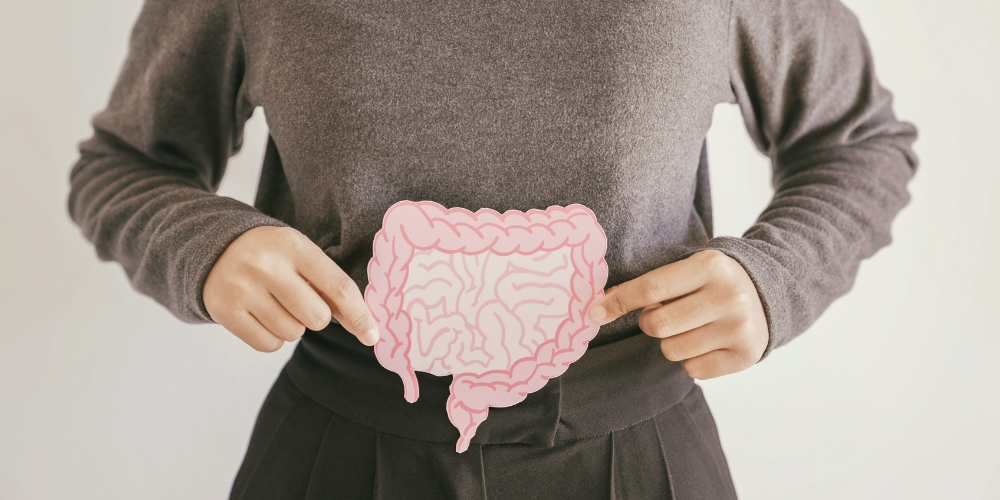
If you come to see me for fatigue, irregular cycles, weight changes, brain fog, PMS, or mood changes, there is a good chance I will ask you about your digestion.
That can feel surprising.
You came in because your hormones feel off. Why are we talking about your gut?
Because your gut and your hormones are closely connected. Looking at one without considering the other can leave important pieces of the picture unexplained.
Your gut is involved in hormone metabolism, immune regulation, nutrient absorption, inflammation, and communication with the nervous system. Your hormones also influence how your digestive system functions.
This is why I don’t think of gut health and hormone health as two separate conversations.
Your gut plays a role in how your body handles estrogen
One of the most interesting connections between the gut and hormones involves estrogen metabolism.
You may have heard the term estrobolome. It refers to the collection of gut microbial genes and functions involved in estrogen metabolism.
Here is the basic process.
Your liver helps process estrogen so it can be prepared for elimination. Some of these estrogen metabolites are transported into the digestive tract through bile.
Once they reach the gut, certain bacteria produce enzymes called beta-glucuronidases. These enzymes can remove the glucuronide group from estrogen metabolites, allowing some estrogen to become available for reabsorption.
This is part of a process called enterohepatic circulation, where substances move between the liver, bile, intestines, and bloodstream.
Research has demonstrated that gut microbial enzymes can participate in this estrogen deconjugation and recycling process.
That does not mean that a particular gut bacteria profile automatically causes high estrogen or that every woman with digestive symptoms has an estrogen problem.
The relationship is more complicated than that.
Estrogen also influences the gut microbiome, which means the relationship goes in both directions.
That is an important distinction because I don’t want you walking away thinking that you can simply “fix your gut” and every hormone symptom will disappear.
It doesn’t work that way.
What does the gut have to do with hormone symptoms?
When I hear symptoms such as heavy periods, worsening PMS, breast tenderness, bloating, constipation, or changes in weight, I want to understand the entire picture.
I want to know what your hormones are doing.
But I also want to know how you are digesting food, how often you are having bowel movements, whether you have a history of antibiotics, whether you experience significant bloating, and whether there are signs that your digestive system may not be functioning well.
Why?
Because hormone metabolism does not happen in isolation.
Your liver, gut, microbiome, intestinal barrier, and elimination pathways all participate in the larger process.
If we only look at a hormone number without considering what happens to that hormone afterward, we may miss part of the story.
This is one reason I often say that symptoms are data.
A change in your digestion may be relevant to a hormone conversation. A change in your menstrual cycle may be relevant to a gut conversation.
They are not necessarily separate problems.
The gut-thyroid connection is just as important
The gut-hormone conversation also extends to your thyroid.
This becomes especially important when we are talking about Hashimoto’s thyroiditis, an autoimmune condition in which the immune system produces antibodies that target the thyroid.
Hashimoto’s is the most common cause of hypothyroidism in the United States. Thyroid peroxidase antibodies, or TPO antibodies, and thyroglobulin antibodies, or Tg antibodies, can help identify autoimmune thyroid disease.
Research is increasingly showing associations between Hashimoto’s and differences in the gut microbiome.
Researchers have found differences in microbial composition and diversity in people with autoimmune thyroid disease compared with healthy controls. However, this does not mean that gut dysfunction is a simple or singular cause of Hashimoto’s.
Autoimmune disease is complex.
Genetics, immune regulation, environmental factors, infections, nutrition, hormones, and other factors can all contribute.
The gut is one part of that larger system.
That distinction matters because I don’t want to oversimplify autoimmune disease into a single explanation.
Why a normal TSH does not tell you everything
This is another area where I see confusion frequently.
TSH, or thyroid-stimulating hormone, is an important thyroid test. It tells us how strongly the pituitary is signaling the thyroid.
But TSH is not the same thing as a complete evaluation of thyroid health.
If Hashimoto’s is a concern, thyroid antibodies can provide additional information about autoimmune activity. The American Thyroid Association notes that Hashimoto’s can sometimes be identified through elevated thyroid antibodies even when thyroid hormone levels are still normal.
There is also evidence that thyroid antibodies can appear years before someone develops clinically recognized thyroid dysfunction.
So if you are experiencing symptoms such as:
- Fatigue
- Brain fog
- Cold intolerance
- Hair thinning
- Constipation
- Weight changes
- Mood changes
- Irregular or heavy periods
and the only thyroid test you have ever had is TSH, I would want to understand more.
That does not mean your symptoms automatically mean you have Hashimoto’s.
It means there may be more information worth considering.
What does a more complete evaluation look like?
This is where I approach each person individually.
There is no single panel that is appropriate for every woman, and testing should be guided by your symptoms, history, medications, cycle status, and clinical picture.
Depending on the situation, I may want to evaluate thyroid function with tests such as TSH and free T4, along with thyroid antibodies when autoimmune thyroid disease is a concern.
I may also look at other hormone and metabolic markers when they are clinically appropriate.
That can include sex hormones, adrenal or cortisol patterns, blood sugar regulation, insulin, nutrients, and inflammatory markers.
Then there is the gut.
When digestive dysfunction appears to be an important part of the picture, more comprehensive stool testing may provide information that a basic stool culture does not.
Depending on the test, this can include information about microbial organisms, digestive function, and markers associated with intestinal inflammation.
The goal is not to order every possible test.
The goal is to choose the information that can help answer the clinical question in front of us.
Nutrient status matters, too
There is another piece that can easily get overlooked: nutrient status.
Your digestive system is responsible for breaking down food and absorbing nutrients. If digestion or absorption is impaired, your nutrient status can be affected.
And nutrients matter for hormone and thyroid function.
Depending on your history, I may consider nutrients such as iron and ferritin, B12, vitamin D, magnesium, zinc, and selenium.
Again, this does not mean every woman with fatigue needs every nutrient test.
It means that when symptoms persist, I want to understand whether there are nutritional factors contributing to the picture rather than assuming the answer is simply “more supplements.”
That is the difference between guessing and investigating.
Why I don't recommend treating the gut as the answer to everything
There is a tendency in the functional medicine and wellness space to make the gut the explanation for almost every symptom.
You will often hear some version of:
Fix your gut and everything else will follow.
I understand why that message is appealing.
The gut is incredibly important.
But in clinical practice, I rarely find that the gut is the entire answer.
Your hormones influence your gut, too.
Estrogen can affect the gastrointestinal system and interact with the microbiome. Thyroid hormones influence gastrointestinal motility, which is one reason constipation can occur with hypothyroidism. Stress hormones can also influence gastrointestinal function and the intestinal barrier.
This creates a bidirectional relationship.
Your gut can influence your hormone metabolism.
Your hormones can influence your gut.
That is why treating one system while completely ignoring the other may not give you the results you are looking for.
Your symptoms may be telling you to look at the bigger picture
If you have been dealing with digestive symptoms and hormone symptoms at the same time, I don’t want you to assume they are unrelated.
And I also don’t want you to assume that your gut is automatically the cause.
Instead, look at the pattern.
What changed first?
How did your menstrual cycle change?
When did the digestive symptoms begin?
Have your bowel habits changed?
Have you had significant antibiotic exposure?
What does your thyroid history look like?
Have thyroid antibodies ever been tested?
Are you absorbing and maintaining the nutrients your body needs?
These questions can give us a much more useful starting point than looking at one isolated symptom or one isolated lab value.
The goal is to connect the dots
Your body is not a collection of separate systems.
Your gut does not operate independently from your hormones. Your thyroid does not operate independently from your immune system. Your hormones do not operate independently from your metabolism.
They are constantly communicating.
That is why my approach is to look for patterns rather than chase individual symptoms.
Sometimes the gut needs more attention.
Sometimes the primary issue is hormonal.
Sometimes thyroid or metabolic factors are more important.
And often, there is overlap.
The goal is to figure out what is actually happening in your body and then determine what needs attention first.
That is the foundation of root-cause care.
If you have been told that your hormone symptoms and digestive symptoms are unrelated, or you continue to have symptoms despite “normal” basic labs, this may be a conversation worth having.
In my Rooted & Realigned program, I take a comprehensive look at your symptoms, hormone patterns, metabolic health, and other factors that may be contributing to how you feel.
You can learn more about Rooted & Realigned at Hope Natural Health.
Your symptoms are worth investigating as a whole picture, not one lab value at a time.
Tags :
- bloating
- /
- estrogen
- /
- gut health
- /
- health
- /
- hormone health
- /
- hormones
- /
- thyroid
- /
- weight
- /
- women's health
Share :
-
Fb
-
Pn
-
Ln
Keep Up With Articles