- Published: September 17, 2026
- //
- Blog
Gut Health and the Nervous System: Why Stress Can Affect Digestion
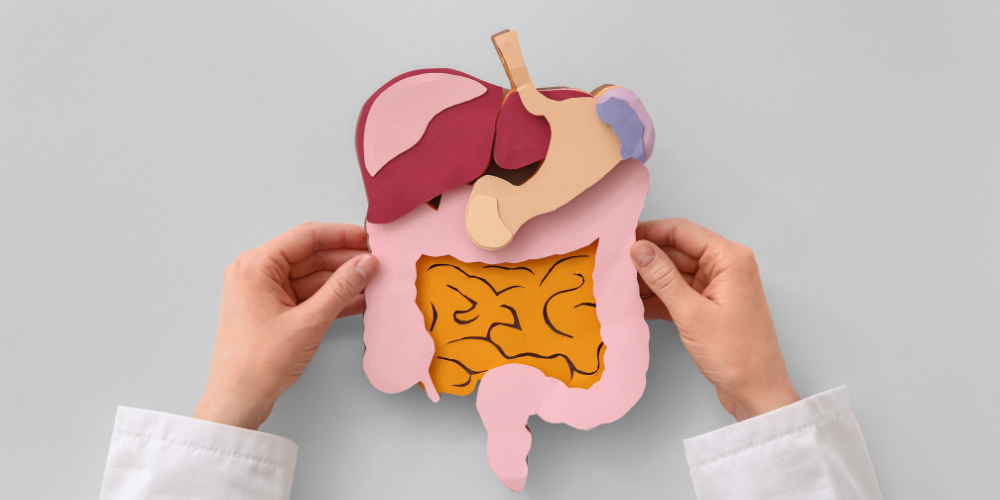
You can eat carefully, take supplements, avoid your trigger foods, and still deal with bloating, constipation, reflux, or the feeling that food is sitting in your stomach.
When digestive symptoms keep returning despite everything you’re doing, your nervous system may be part of the picture. The gut and nervous system communicate in both directions, which means stress can influence digestion, motility, gut sensitivity, and how your symptoms feel.
In this article, I’ll explain what that connection means, why doing more isn’t always the answer, and how I look at persistent digestive symptoms from a root-cause perspective.
What Is the Gut-Nervous-System Connection?
Your digestive system doesn’t work independently from the rest of your body.
Your brain and gut are in constant communication through the nervous system, hormones, immune signals, and other pathways. This relationship is often described as the gut-brain axis, while current medical terminology also uses disorders of gut-brain interaction for conditions such as IBS.
That communication works in both directions.
Your digestive system sends information to your brain, and your brain sends signals back to your digestive system. Those signals can influence things such as gut sensitivity and the movement of food through your digestive tract.
This is one reason digestive symptoms can change when you’re under significant stress.
According to the National Institute of Diabetes and Digestive and Kidney Diseases, problems with brain-gut interaction can affect how quickly food moves through the digestive tract and how strongly you experience sensations from the gut.
The gut and nervous system communicate continuously, so digestive symptoms can’t always be understood by looking at food alone.
How Stress Can Affect Digestion
Your body has different priorities depending on what it perceives is happening around you.
When you’re experiencing significant stress, your nervous system shifts toward responding to that perceived threat. Digestion doesn’t necessarily become the body’s primary focus in that state.
Research has linked stress with changes in gastrointestinal motility, secretion, sensitivity, and other aspects of digestive function.
This doesn’t mean stress is the explanation for every digestive symptom. It means stress can be one piece of a much larger clinical picture.
I’ve seen this distinction matter in practice.
Someone may come in focused entirely on what she ate because she notices that certain meals make her bloated. But when we look at the broader picture, we may also find irregular meals, chronic stress, poor sleep, constipation, nutrient deficiencies, changes in hormones, or other factors affecting digestion.
The goal isn’t to blame stress for the symptom.
The goal is to understand whether the nervous system is contributing to what’s happening.
Why Doing More for Your Gut Doesn't Always Help
I’ve worked with women who have tried nearly everything they can find for their digestion.
They’ve eliminated foods. They’ve purchased supplements. They’ve followed protocols from social media. They’ve tried probiotics, digestive products, cleanses, and restrictive diets.
Sometimes those interventions help.
Sometimes they leave you with an even longer list of things you’re afraid to eat or afraid not to take.
There’s another problem that can happen when you’re constantly monitoring your symptoms. Every sensation becomes something you need to investigate immediately.
Bloating becomes a reason to search for another food sensitivity. A bowel movement changes, and you’re looking for another supplement. Reflux appears, and you start another protocol.
That constant monitoring can become part of the stress load you’re already carrying.
This is one reason I don’t want your digestive care to become a never-ending process of adding more.
More supplements don’t automatically mean more progress when the underlying drivers haven’t been identified.
Bloating, Constipation, and Reflux Can Have More Than One Driver
Digestive symptoms are signals. They give us information, but they don’t always tell us the entire story by themselves.
Bloating and stress
Bloating can be influenced by many factors, including food, fermentation, motility, constipation, gut sensitivity, and the way your digestive system responds to stress.
If you’re bloated after nearly every meal, I want to know more than what you ate.
I want to understand what your digestion looks like before, during, and after that meal.
Constipation and the nervous system
Constipation can involve more than how much fiber you’re eating.
Motility, hydration, food intake, medications, hormones, pelvic floor function, gut-brain signaling, and other factors can all contribute.
The nervous system also communicates with the digestive tract and influences gastrointestinal function, so constipation deserves a broader evaluation when basic strategies aren’t helping.
Reflux and digestion
Reflux is another symptom that deserves context.
If you’re experiencing reflux, the answer isn’t automatically to assume that one specific digestive factor is responsible. The timing of symptoms, meal patterns, stress, motility, medications, and other digestive factors may all matter.
If you’re repeatedly treating the symptom without understanding why it’s happening, you may keep ending up in the same place.
What Root-Cause Gut Care Looks Like
Root-cause care starts by asking a different question.
Instead of only asking, “What can I take for this symptom?” I want to know what could be contributing to the symptom in the first place.
That means looking at the person rather than treating one lab value, one diagnosis, or one symptom in isolation.
Depending on the person, that may include looking at:
- Digestive symptoms and bowel patterns
- Meal timing and adequate food intake
- Stress and sleep
- Motility
- Nutrient status
- Hormonal patterns
- Medications and supplements
- Previous infections or digestive conditions
- Food patterns and possible sensitivities
- Relevant laboratory or stool testing
I don’t automatically order every test for every person.
The information we gather should have a reason behind it. Testing should help answer a clinical question and guide what we do next.
That same principle applies to treatment.
If your body is already overwhelmed, adding five new supplements at once doesn’t necessarily give us a clearer picture of what’s helping.
I want to know what your body is responding to and why.
Nervous System Regulation for Digestion
Nervous system regulation doesn’t have to mean adding another complicated routine to your day.
One place to start is how you approach meals.
Before you eat, take a few slow breaths and give yourself a moment to shift out of whatever you were doing immediately beforehand.
Then slow down enough to actually chew your food.
These aren’t replacements for appropriate medical evaluation. They’re ways of giving your digestive system a better environment in which to do its work.
I also want you to notice what happens when a symptom appears.
If you immediately think, “What did I do wrong?” or start searching for another protocol, pause before reacting.
You can take the symptom seriously without immediately assuming you need to fix it that second.
A symptom is information, not a complete diagnosis.
That distinction can change how you approach your health.
When Digestive Symptoms Need a Closer Look
If bloating, constipation, reflux, or abdominal discomfort keeps returning despite your efforts, it’s reasonable to step back and reassess the whole picture.
You may need to look beyond the most obvious symptom.
For some women, that means evaluating digestion more closely. For others, the bigger picture includes hormones, nutrient status, blood sugar regulation, stress, sleep, or another underlying factor.
And if you have persistent or concerning symptoms, including gastrointestinal bleeding, unexplained weight loss, severe or persistent pain, or other new changes, talk with an appropriate medical professional rather than assuming stress is the cause.
The nervous system is part of the picture. It isn’t the entire picture.
FAQ
Stress can influence gut-brain signaling, gastrointestinal motility, and how strongly you perceive digestive sensations, which may contribute to bloating in some people.
Stress can affect gastrointestinal motility and brain-gut signaling, which may contribute to changes in bowel habits. Constipation can also have many other causes, so persistent constipation deserves individualized evaluation.
The gut and brain communicate continuously through neural, hormonal, immune, and other pathways. This two-way communication can influence digestion, motility, gut sensitivity, and symptoms.
Healthy food choices don’t address every potential cause of bloating. Motility, constipation, food sensitivities, digestive function, stress, hormones, and other factors may contribute.
Nervous system regulation may support digestive function and symptom management because brain-gut interactions influence gastrointestinal activity. It should be considered alongside appropriate evaluation rather than as a replacement for medical care.
Supplements may address one piece of a problem while leaving other contributors unaddressed. If symptoms persist, it’s often more useful to reassess the underlying factors than to keep adding products.
No. IBS is a real disorder of gut-brain interaction involving changes in gastrointestinal function and symptom processing. The brain-gut connection describes biological communication between the nervous system and digestive tract, not an imaginary cause of symptoms.
The Gut Is Giving You Information
When you’ve been dealing with digestive symptoms for months or years, it’s understandable to become focused on finding the next thing to eliminate, add, or change.
But sometimes the more useful step is to stop adding and start looking at the whole picture.
Your gut and nervous system are connected. Your digestion doesn’t happen separately from your stress physiology, sleep, hormones, nutrient status, or daily patterns.
That’s why I look beyond the symptom when I’m working with a patient.
When you’re ready to better understand how your hormones may be contributing to the symptoms you’re experiencing, take the hormone quiz to get a clearer starting point.
Tags :
- bloating
- /
- brain
- /
- brain function
- /
- gut health
- /
- health
- /
- hormone health
- /
- hormones
- /
- Nervous System
- /
- stress
- /
- women's health
Share :
-
Fb
-
Pn
-
Ln
Keep Up With Articles